- Home
- About Us
- The Connection Podcast
- Education & Tools
- Directory of Resources
- News and Updates
- Impact Reports
- Mental Health Matters
- Yuma CARES
- Become a Member
- Coalition Meetings
- Partners
- Youth Coalition
- Contact Us
- Red Ribbon Month
- Yuma CARES Coalition
- YumaCARES Reentry Program
- Veterans Wellness
- Impaired Driving Month
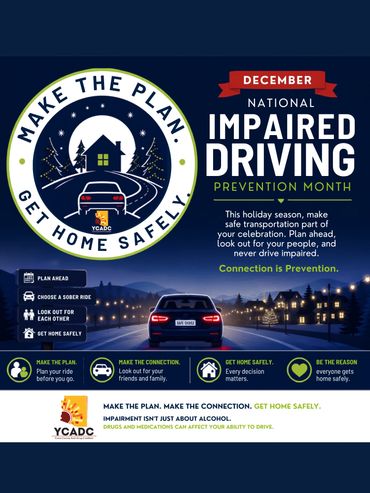
National Impaired Driving Prevention Month

As the holiday season arrives, December will focus on National Impaired Driving Prevention Month and the importance of making safe transportation part of every celebration. The holidays are a time for gathering with family and friends, but they can also bring increased risks associated with impaired driving.
Make the Plan. Make the Connection. Get Home Safely.


RESOURCES
Holiday Stress
Loneliness & Grief - National Grief Awareness Week
Loneliness & Grief - National Grief Awareness Week
The Holiday Season can be an extra stressful time for many people. When you offer support, you’re providing hope to those who may need it most. Find ways to support yourself and those around you.
Learn how to talk about mental health. Educate yourself and others about mental health, substance use disorders, and suicide prevention. Learn the warning signs and risk factors, action steps you can take, and how to support someone at risk or in crisis.
Loneliness & Grief - National Grief Awareness Week
Loneliness & Grief - National Grief Awareness Week
Loneliness & Grief - National Grief Awareness Week
The first week of December is observed as National Grief Awareness Week. It’s an important observance dedicated to raising awareness about grief and loss. It aims to break the stigma surrounding grief, acknowledging that it is a natural response to loss and can affect individuals in various ways. This week provides an opportunity to offer support to those who are grieving, foster understanding, and promote open conversations about this often-sensitive topic.
Seasonal Affective Disorder (SAD)
Loneliness & Grief - National Grief Awareness Week
Seasonal Affective Disorder (SAD)
Is it just the 'winter blues' or seasonal affective disorder (SAD)? Learn the signs and symptoms of SAD, a type of depression, and how to get help. Reach out to someone to speak about what’s weighing on you. You can also call or text 988 or chat 988Lifeline.org
Find Support
Show Your Support
Seasonal Affective Disorder (SAD)
The Holiday Season can be an extra stressful time for many people. When you offer support, you’re providing hope to those who may need it most. Find ways to support yourself and those around you: findsupport.gov
Grief Awareness
Show Your Support
Show Your Support
Holidays and special dates can be a difficult time. If your family, friend, or loved one is grieving a loss, offer help and support to assure them that they’re not alone in their grieving process. Learn more: https://www.samhsa.gov/newsroom/observances/national-grief-awareness-week
Show Your Support
Show Your Support
Show Your Support
Remember: A simple check-in can mean the world. Spread the love and joy of the season by showing your support for those on their recovery journey. No one in recovery should feel alone—especially during the holiday season. Visit samhsa.gov/find-help for support and resources.
Additional Information
Tips to Improve Connection and Reduce Isolation and Loneliness
Social connection can improve stress, health, and overall wellbeing. Make time in your routine to stay in touch with family and friends, foster new connections, and deepen casual connections. Here are a few tips for staying connected, as well as taking care of your mental and physical health and helping others. If you notice someone experiencing loneliness or becoming increasingly isolated, the tips, resources, and helplines provided below can assist as a foundation for providing meaningful support.
Focus on your interests to fuel connections. Connect with those who share similar interests to create a sense of belonging. Join a club that matches your interests such as crafting, book clubs, gardening, or physical fitness groups such as yoga and biking. Volunteering at local organizations can be a great way to build connections in your community.
Use technology intentionally to stay connected. Have weekly phone or video calls with loved ones. Participate in virtual programming from places of worship, your local library and community center. Join and engage in online communities that support, uplift, and affirm who you are in healthy ways.
Show compassion and be a lifeline for others. Stay connected by following up with friends or loved ones to see how they are doing. This type of contact can increase feelings of connectedness and show your ongoing support.
Take care of your body. A healthy lifestyle that includes regular exercise, such as a walk with a friend. A healthy diet and sufficient sleep are fundamental to physical and mental well-being. Alcohol can also deepen feelings of loneliness and depression and even raise the risk of suicide. Cutting back—or choosing not to drink—can make a real difference for your health and emotional well-being. Caring for your body is great for boosting mood and increasing capacity to cope with stress. Being physically active, eating well, and making sleep a priority may help reduce the risk of illness and prevent chronic disease.
Take a break. Taking purposeful breaks from work or difficult tasks is important for boosting overall health. Engage in activities that promote relaxation and well-being like deep breathing, grounding meditation, stretching, listening to music, or light physical activity. Even 5 minutes can help.
Seek Support for Yourself. If you are feeling disconnected, lonely or stressed, remember that you are not alone. Talk about your feelings with others. Seek support from friends, family, peers with lived experience, trusted organizations, clergy, or others in your faith community. Pursue services from a professional; talk to a healthcare provider about your feelings and needs. Use resources like SAMHSA’s findsupport.gov to locate mental health supports for you or a loved one or findtreatment.gov for treatment services in your community.
Support Someone Who May Be Feeling Lonely. If you notice someone becoming more withdrawn or isolated, reaching out can make a meaningful difference. Checking in regularly with a message or call, offering specific invitations, and listening without judgment can help them feel seen and supported. Encourage them to talk about how they’re feeling, and share helpful resources, if they need additional support.
There is help. There is hope. Someone cares.
Reaching out and making connections can help you and those you care about. Working together, we can make a difference.
Learn More
Learn how to talk about mental health. Educate yourself and others about mental health, substance use disorders, and suicide prevention. Learn the warning signs and risk factors, action steps you can take, and how to support someone at risk or in crisis.
Contact the 988 Suicide & Crisis Lifeline. If you or someone you know is in crisis, text or call 988 or chat 988Lifeline.org for help 24 hours a day, seven days a week, 365 days a year.
This website uses cookies.
We use cookies to analyze website traffic and optimize your website experience. By accepting our use of cookies, your data will be aggregated with all other user data.